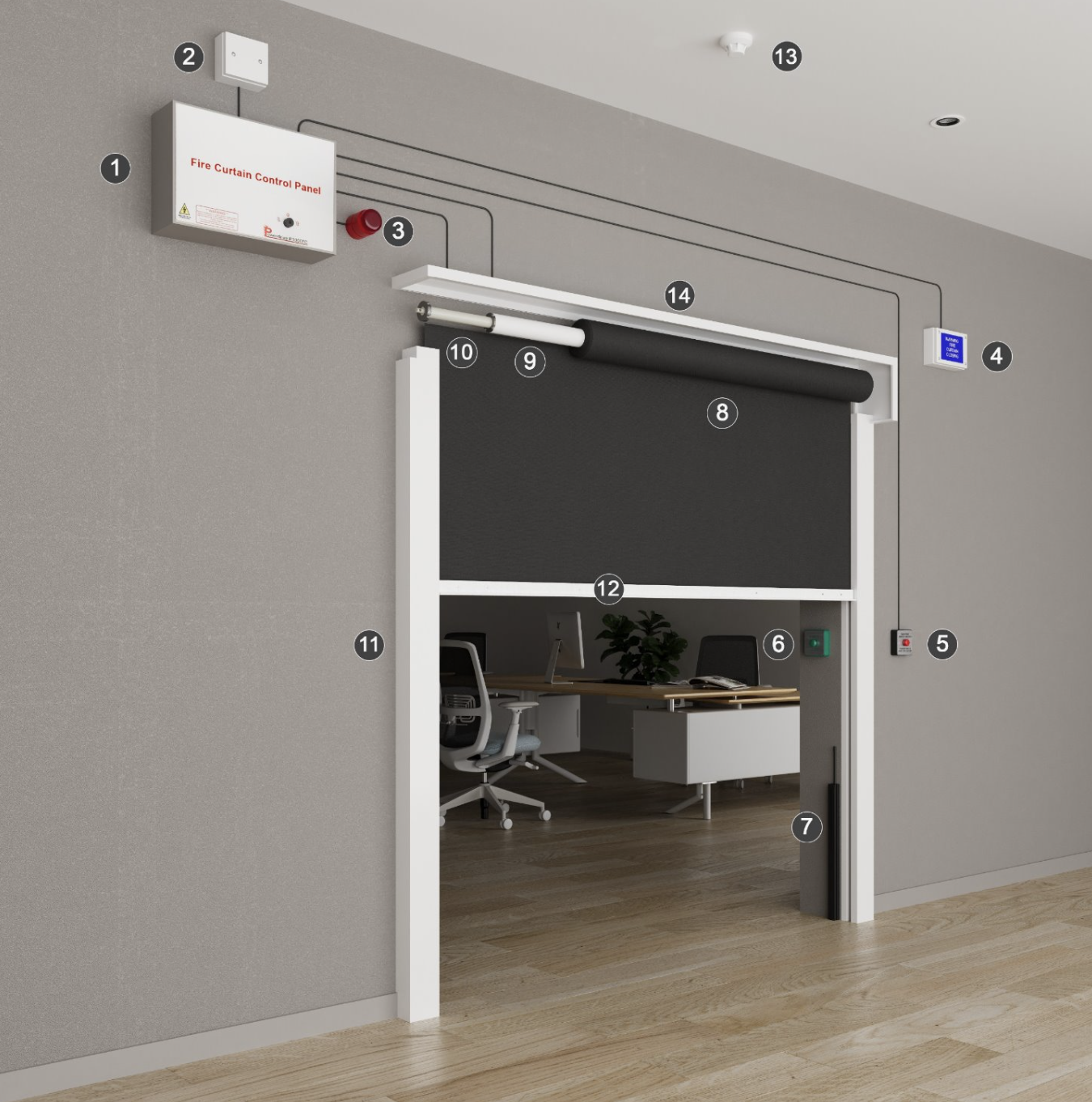
Fire curtains are a vital component of modern fire safety systems, designed to contain the spread of fire and smoke within a building. Their primary function is to act as a barrier, protecting occupants and property by limiting the progression of flames and hazardous smoke. But what exactly are fire curtains made of, and what makes them effective in emergency situations? Let’s explore the materials, maintenance, selection process, and types of fire curtains to understand their role in safeguarding lives and assets.
At the core of fire curtains is a high-performance, fire-resistive fabric engineered to withstand extreme temperatures. The most common material used is heavyweight glass fiber, chosen for its exceptional fire-resistant properties. To enhance strength and durability, this glass fiber is often reinforced with stainless steel wire. This reinforcement ensures that the fabric maintains its integrity during a fire, reducing the likelihood of deterioration over time. When exposed to heat, fire curtains made from high-quality glass fiber can effectively extinguish flames and smoke, acting as a reliable barrier during critical moments.
In addition to the primary fabric, fire curtains are coated with a specialized fire-resistant material—aluminium pigmented diamond polyurethane. This coating offers additional heat and smoke resistance while maintaining a lightweight and flexible profile. Such flexibility facilitates easier routing and installation, allowing fire curtains to be seamlessly integrated into various building layouts without compromising their functionality or safety standards.
Maintaining fire curtains is essential to ensure their proper operation in an emergency. Regular inspections and servicing by qualified personnel are mandatory, often driven by legal requirements such as the 2005 Regulatory Reform Order. Routine maintenance involves checking mechanical components like motors, barrels, and side guides for signs of wear and tear. It also includes testing the control panels and emergency controls to ensure they respond correctly. Moreover, visual inspections of the fabric for damage or deterioration are crucial. Timely repairs and servicing ensure that fire curtains will perform reliably during a fire, providing peace of mind for building managers and occupants alike.
Choosing the right fire curtain depends on a thorough understanding of a building’s layout, fire safety needs, and legal obligations. Key considerations include identifying areas where fire curtains are necessary, such as atria, open-plan offices, stairwells, elevator shafts, or large gathering spaces like theatres and shopping malls. The fire resistance rating of the curtain is another critical factor. This rating indicates the duration—30, 60, 90, or 120 minutes—that the curtain can effectively contain fire and smoke during a blaze, based on standardized fire testing protocols.
The orientation of the curtain also matters; vertical curtains deploy downward from the ceiling, ideal for compartmentalizing large open spaces, while horizontal curtains deploy downwards or outwards between floors or across horizontal distances. Additionally, it’s essential to consider whether the fire curtain needs to be integrated with existing fire alarm and detection systems, ensuring coordinated response during an emergency. Consulting with qualified fire safety specialists can help ensure that the selected fire curtain meets building codes and provides optimal protection for tenants and property.
Fire curtains come in various types, tailored to specific needs. Vertical fire curtains are commonly used to block large open spaces or obstructions, providing flexibility in fire compartmentalization. Their fire resistance ratings, established by standards such as BS 8524-1 and BS EN 1634-1, vary from 30 to 120 minutes, reflecting their ability to serve as a robust barrier during a fire event. These standards ensure that fire curtains meet rigorous safety criteria, offering dependable protection.
A1S Group, a leading UK-based manufacturer and installer, specializes in the production of high-quality fire and smoke curtains. With over 35 years of experience, A1S Group has successfully executed projects for prominent clients including Selfridges on Oxford Street and New Scotland Yard HQ. Their commitment to quality, safety, and innovation makes them a trusted name in fire safety across sectors such as commercial, healthcare, education, and hospitality.
In conclusion, fire curtains are made from advanced, fire-resistant materials designed to withstand extreme heat and contain fires effectively. Regular maintenance, careful selection based on building needs, and adherence to safety standards are essential to ensure their performance. As a crucial element of fire safety systems, fire curtains provide peace of mind, protecting lives and property against the devastating impact of fire.